New Jersey's 2021 telehealth law lets a doctor who has reviewed your medical records treat you from what you send when that meets the in-person standard of care, but its medical board's rules still call for real-time video or audio, and for a comprehensive physical examination before prescribing for obesity, which the board lets a doctor do by telemedicine, so your doctor may ask you to book a video visit.
$135 to $199 a month, depending on your weekly dose, with doctor visits, messaging and shipping included.
At 0.24–0.48 mg/wk:
Gentle Health
$135/mo
Brand directwithout doctor support
$349/mo
Hims / Ro
$498/mo
At >0.48–1.2 mg/wk:
Gentle Health
$159/mo
Brand directwithout doctor support
$349/mo
Hims / Ro
$498/mo
At >1.2–2.4 mg/wk:
Gentle Health
$199/mo
Brand directwithout doctor support
$349/mo
Hims / Ro
$498/mo
What each price is made of
Gentle Health
Medication, injection supplies, doctor reviews and dose decisions, unlimited messaging and video visits, refrigerated delivery and licenses.
Brand direct
Medication, in pens with the needle built in. New patients: $199 a month for the first two months at the two lowest doses.
Hims / Ro
The brand price for medication, plus a $149 monthly membership for access to a prescriber, messaging with a care team, and dose and side-effect support. New members: $39 for the first month.
A doctor can check whether semaglutide is safe for you and whether you need it in the first place.
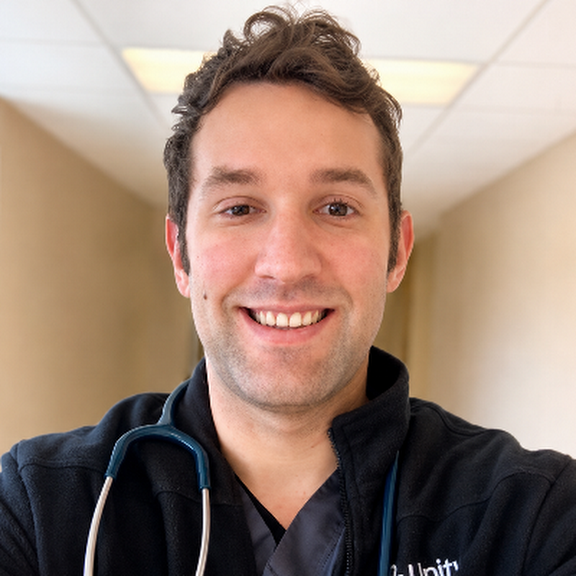
Complete the intake and I’ll review your history. Message me with any questions, or book a video visit if you’d like one. The intake and my first review are free.
James Simmons, MD · Medical Director, board-certified in emergency medicine
You will probably regain most of the weight you lost. On average, people regained two-thirds of it within a year of stopping.
How this was studied · STEP 1 extension · 327 people · 68 weeks on, then a year off · vs placebo
Who took part
STEP 1 participants (adults with obesity, or overweight plus a weight-related condition, and no diabetes) who finished all 68 weeks of their shots, at selected sites in Canada, Germany, Japan, the UK and the US
How many people
228 who had been on semaglutide and 99 who had been on placebo
How long
68 weeks on the shots (16 weeks of stepping up the dose, then a year at 2.4 mg), then a year off the study shots
What they got
Weekly Wegovy shots, up to 2.4 mg, plus diet and activity advice
Compared with
Dummy shots with no medicine (placebo), plus the same advice. Nobody knew which they had, even during the year off.
What was measured
Change in weight against each person’s starting weight, up to a year after stopping. This follow-up was an extra, exploratory analysis, not the trial’s main result.
What it did not test
Stopping the drug while keeping the diet and activity support. Both stopped at week 68, so the regain reflects both.
Yes, to keep the weight off. Over 48 weeks, people switched to placebo regained 6.9%, while people who stayed on semaglutide lost another 7.9%.
How this was studied · STEP 4 trial · 803 people · 68 weeks · vs placebo
Who took part
Adults with a BMI of 30 or more (obesity), or 27 or more plus a weight-related condition, and no diabetes. Only people who reached 2.4 mg in the first 20 weeks entered the comparison.
How many people
535 stayed on semaglutide and 268 switched to placebo, out of 902 who started
How long
68 weeks: 20 weeks with everyone on Wegovy, stepping up to 2.4 mg, then 48 weeks on their assigned shots
What they got
Weekly Wegovy 2.4 mg shots for the last 48 weeks, plus diet and activity advice
Compared with
Dummy shots with no medicine (placebo) for the last 48 weeks, plus the same advice. Nobody knew which they had.
What was measured
Change in body weight from week 20 to week 68, the trial’s main result (primary endpoint). The week-68 points on the curve, against starting weight, are a supporting secondary result (Figure 2C).
What it did not test
A lower ongoing dose. The Wegovy label allows 1.7 or 2.4 mg as the ongoing dose for weight loss; this trial kept everyone on 2.4 mg.
No, not for weight loss. In a head-to-head trial, people lost 20.2% of their weight on tirzepatide and 13.7% on semaglutide over 72 weeks.
Tirzepatide10–15 mg
−20.2%
Semaglutide1.7–2.4 mg
−13.7%
How this was studied · SURMOUNT-5 trial · 751 people · 72 weeks · vs tirzepatide
Who took part
Adults with a BMI of 30 or more (obesity), or 27 or more plus a weight-related condition such as high blood pressure. Nobody had diabetes.
How many people
376 on semaglutide and 375 on tirzepatide
How long
72 weeks
What they got
Weekly Wegovy shots, raised every 4 weeks from 0.25 mg to the highest dose each person tolerated: 1.7 or 2.4 mg, plus diet and activity advice
Compared with
Weekly tirzepatide shots, raised every 4 weeks from 2.5 mg to the highest dose each person tolerated: 10 or 15 mg, plus the same advice. There was no placebo. Everyone knew which drug they were taking.
What was measured
Average change in body weight after 72 weeks, the trial’s main result (primary endpoint)
What it did not test
The newer 7.2 mg semaglutide dose (Wegovy HD), or heart attacks and strokes. For heart risk, semaglutide (as Wegovy) is FDA-approved to lower it in people with heart disease; tirzepatide (as Mounjaro) only in people with type 2 diabetes.
All three are weekly semaglutide shots, and all are legal. Only Wegovy and Ozempic are FDA-approved: Wegovy for weight loss, Ozempic for type 2 diabetes.
WegovyOzempicCompoundedActive ingredientsemaglutidesemaglutidesemaglutideLegalYesYesYesTested in peopleYesYesNoFDA-approved forWeight lossType 2 diabetes– not FDA-approved
Yes, some. Over 68 weeks on semaglutide, fat mass fell 19.3% and lean mass 9.7%, so lean mass went from 53.9% to 56.9% of body weight.
Before
Lean 53.9%Fat 43.4%
After 68 weeks
Lean 56.9%Fat 39.9%
Lean mass: muscle, organs, waterFatRest of the scan, not reported
How this was studied · STEP 1 body-scan substudy · 140 people · 68 weeks · vs placebo
Who took part
STEP 1 participants at 9 of its sites whose BMI was 40 or less: adults with obesity, or overweight plus a weight-related condition, without diabetes
How many people
95 on semaglutide and 45 on placebo, out of 1,961 in the whole trial
How long
68 weeks, with an X-ray body scan (DEXA) before starting and at week 68
What they got
Weekly Wegovy shots, up to 2.4 mg, plus diet and activity advice
Compared with
Dummy shots with no medicine (placebo), plus the same advice. Nobody knew which they had.
What was measured
Change in fat, lean mass and fat around the organs between the two scans. This was an extra, exploratory analysis, not the trial’s main result.
On placebo
Body weight fell 3.6% (vs 15.0% on semaglutide), with no major change in fat or lean mass
Our arithmetic
The study reports the shares at the start (lean 53.9%, fat 43.4%) and how many points they moved (lean up 3.0, fat down 3.5). After 68 weeks: lean 53.9 + 3.0 = 56.9%, fat 43.4 − 3.5 = 39.9%. The study does not report the rest of the scan.
Within the first month. In the main trial, people had already lost 2.3% of their weight by week 4, and kept losing until about week 60.
How this was studied · STEP 1 trial · 1,961 people · 68 weeks · vs placebo
Who took part
Adults with a BMI of 30 or more (obesity), or 27 or more plus a weight-related condition such as high blood pressure. Nobody had diabetes.
How many people
1,306 on semaglutide and 655 on placebo. Everyone was counted, including people who stopped their shots.
How long
68 weeks: 16 weeks of stepping up the dose, then a year at 2.4 mg
What they got
Weekly Wegovy shots, up to 2.4 mg, plus diet and activity advice
Compared with
Dummy shots with no medicine (placebo), plus the same advice. Nobody knew which they had.
What was measured
Average change in body weight after 68 weeks, and the share of people who lost at least 5%, the trial’s main results (primary endpoints). The curve and its numbers on this card are read from the trial’s chart of average weight over time (Figure 1A), not from those main results.
Yes, if you already have heart or blood-vessel disease and overweight or obesity: over 3.3 years on average, it cut the risk of a heart attack, stroke or heart death by 20%.
On placebohad a heart attack, stroke or heart death
8.0%
On semaglutidehad a heart attack, stroke or heart death
6.5%
How this was studied · SELECT trial · 17,604 people · about 3.3 years · vs placebo
Who took part
Adults aged 45 or older who had had a heart attack or stroke, or had peripheral artery disease (narrowed arteries in the legs), with a BMI of 27 or more (overweight or obesity). Nobody had diabetes.
How many people
8,803 on semaglutide and 8,801 on placebo
How long
3.3 years on average (39.8 months), starting with 16 weeks of stepping up the dose
What they got
Weekly Wegovy shots, up to 2.4 mg, on top of their usual heart care. People who could not tolerate 2.4 mg could stay on a lower dose.
Compared with
Dummy shots with no medicine (placebo), on top of the same usual care. Nobody knew which they had.
What was measured
Time to a first heart attack, stroke or death from heart or blood-vessel disease, the trial’s main result (primary endpoint)
A lab-made version of GLP-1, a gut hormone that helps control appetite, changed to last longer: half of a shot is still in the body about a week later.
Yes, as far as we know: in the largest trial, followed for 3.3 years on average, serious health problems were less common than on placebo.
Serious health problemfewer than on placebo
33.4%placebo 36.4%
Cancerno different from placebo
4.8%placebo 4.7%
Gallbladder problemsmore than on placebo
2.8%placebo 2.3%
Stopped over a side effecttwice as many
16.6%placebo 8.2%
On semaglutide, over 3.3 years on averageOn placebo
How this was studied · SELECT trial · 17,604 people · about 3.3 years · vs placebo
Who took part
Adults aged 45 or older who had had a heart attack or stroke, or had peripheral artery disease (narrowed arteries in the legs), with a BMI of 27 or more (overweight or obesity). Nobody had diabetes.
How many people
8,803 on semaglutide and 8,801 on placebo
How long
3.3 years on average (39.8 months), starting with 16 weeks of stepping up the dose
What they got
Weekly Wegovy shots, up to 2.4 mg, on top of their usual heart care. People who could not tolerate 2.4 mg could stay on a lower dose.
Compared with
Dummy shots with no medicine (placebo), on top of the same usual care. Nobody knew which they had.
What was measured
The main result (primary endpoint) was heart attacks, strokes and deaths from heart or blood-vessel disease. For safety, the trial recorded only serious health problems, problems that made people stop the drug, and a few chosen in advance.
Semaglutide acts on one gut-hormone receptor, GLP-1; tirzepatide acts on two, GLP-1 and GIP. In a head-to-head trial, people lost more weight on tirzepatide.
Yes, for one patient whose doctor documents why the brand won’t do, such as needing a strength the pens don’t come in.
Counts as a reasonA strength neither Wegovy nor Ozempic comes in, written up by the doctor for that patient
Doesn’t countAdding B12 (cyanocobalamin) at close to the strengths already sold (within 10%)
How we got here · the FDA’s shortage rules
Feb 21, 2025
The FDA declared the semaglutide shortage over, ending the exception that let pharmacies make copies
Apr 24, 2025
A federal court declined to block that decision, so the grace period for pharmacies ended
Apr 2026
The FDA said semaglutide mixed with B12 (cyanocobalamin) may still count as a copy when both amounts are within 10% of the strengths of the approved products
Compounding lets me prescribe the dose a patient needs instead of limiting them to the fixed strengths available in single-dose brand pens. That flexibility can matter when someone needs to increase more slowly or stay at a lower dose.
James Simmons, MD · Medical Director, board-certified in emergency medicine
The pharmacy is licensed in New Jersey and compounds it for your prescription under Section 503A.
Licensed in New JerseyThe US pharmacy that fills it
Independent lab resultsWe hold an independent lab’s potency, sterility and endotoxin results for one batch from Evoluciona Pharma, of semaglutide with B6 (pyridoxine).
Made for your prescriptionCompounded for one patient under Section 503A, not mass-produced
No sign of it. In one clinic study, people on compounded semaglutide with B12 (cyanocobalamin) lost 4.6% of their weight in 3 months, close to Wegovy’s trial at that point (5.9%) and far from placebo (2.2%).
2.2%
PlaceboWegovy trial
4.6%
Semaglutide + B12 (cyanocobalamin)clinic study
5.9%
WegovyWegovy trial
How this was studied · 1 clinic study · 94 people · 3 months · no comparison group
Who took part
Clients of a wellness clinic chain in a weight-management program; 81 women and 13 men, 47 years old on average
How many people
94
How long
3 months, while the dose was still going up
What they got
Weekly compounded semaglutide with B12 (cyanocobalamin), starting at 0.25 mg and rising toward 2.4 mg
Compared with
Nobody: everyone got the same shots. The Wegovy and placebo bars come from a different study, Wegovy’s main trial at week 12 (about 3 months), read from its chart.
What was measured
Weight change after 3 months, the study’s main result (primary endpoint)
Who paid for it
Not stated in the abstract, the only part of the paper we hold. All seven authors list Restore Hyper Wellness, the clinic chain that gave the shots, as an employer.
Educational only, not medical advice: talk to a doctor about your own history before starting or stopping anything.
Every trial cited here studied branded semaglutide (Wegovy or Ozempic), not the compounded medication we dispense, which is not FDA-approved and has never been trialed on its own.

 Step 1Fill in the intakeTell us about your health and goals
 Step 2Request careAn online request, a message or a video visit
 Step 3Doctor reviewa doctor licensed in New Jersey decides whether it’s right for you
 Step 4SubscribeIf prescribed, start your plan and we order your medicine
 Step 5Get your medicineA licensed pharmacy ships it to your door