Step 2Request careAn online request, a message or a video visit
Step 3Doctor reviewa doctor licensed in Vermont decides whether it’s right for you
Step 4SubscribeIf prescribed, start your doctor’s care at $28/mo and we send your prescription
Step 5Get your medicineYou buy it from LillyDirect, which ships it to your door
What Vermont rules require
Vermont says an online questionnaire alone is not enough to evaluate a new patient, so your doctor may message you with follow-up questions or ask you to book a video visit.
$28 a month for your doctor. You pay LillyDirect for the medicine, at its self-pay price for your dose unless it takes your insurance for the KwikPen; its checkout adds the supply kit.
At 2.5 mg:
Gentle Healthdoctor + medicine + supplies
$332/mo
Romembership + medicine
$448/mo
At 5 mg:
Gentle Healthdoctor + medicine + supplies
$432/mo
Romembership + medicine
$548/mo
At 7.5–15 mg:
Gentle Healthdoctor + medicine + supplies
$482/mo
up to $732
Romembership + medicine
$598/mo
up to $848
What each price is made of
Gentle Health
Your doctor’s care, $28 a month: reviews, dose decisions, messaging and video visits. Plus LillyDirect’s self-pay price for Zepbound, which you pay LillyDirect. Plus LillyDirect’s supply kit, $5 a month: needles and syringes (pen needles for KwikPen).
Ro
The maker’s price for Zepbound, plus Ro’s membership: $39 the first month, then $149 a month.
No, we don’t bill insurance or file prior authorizations. You pay $28 a month for the doctor, by card or with an HSA or FSA card. LillyDirect takes some insurance for the KwikPen, but a plan that needs a prior authorization won’t cover it through us; otherwise you pay its self-pay price.
A doctor can check whether Zepbound is safe for you and whether you need it in the first place.
Complete the intake and I’ll review your history. Message me with any questions, or book a video visit if you’d like one. The intake and my first review are free.
James Simmons, MD · Medical Director, board-certified in emergency medicine
15.0% to 20.9% of your body weight on average over 72 weeks, depending on the dose, in people without diabetes; 3.1% on placebo.12.8% to 14.7% of your body weight on average over 72 weeks, depending on the dose, in people with type 2 diabetes; 3.2% on placebo.
Without diabetes:
5 mga week
−15.0%
10 mga week
−19.5%
15 mga week
−20.9%
Placebo
−3.1%
How this was studied · SURMOUNT-1 trial · 2,539 people · 72 weeks · vs placebo
Who took part
Adults with obesity, or with overweight plus a weight-related condition such as high blood pressure. People with diabetes were excluded.
How many people
630 on 5 mg, 636 on 10 mg, 630 on 15 mg and 643 on placebo
How long
72 weeks, including up to 20 weeks of stepping up the dose
What they got
Weekly shots of Lilly’s tirzepatide, the drug sold as Zepbound, at a fixed 5, 10 or 15 mg, reached by rising 2.5 mg every 4 weeks. Everyone had counseling toward eating 500 fewer calories a day and at least 150 minutes of activity a week.
Compared with
Dummy shots with no medicine (placebo), plus the same counseling. Nobody knew which they had.
What was measured
Average change in body weight after 72 weeks, and the share of people who lost at least 5%, the trial’s two main results (primary endpoints).
Who was counted
Everyone randomized, as the Zepbound label reports it; missing week-72 weights were estimated (imputed).
How this was studied · SURMOUNT-2 trial · 938 people · 72 weeks · vs placebo
Who took part
Adults with type 2 diabetes and a BMI of 27 or more, with an HbA1c of 7% to 10%, managed by diet and exercise or by diabetes pills other than DPP-4 inhibitors or GLP-1 pills. People on insulin or injected GLP-1 medicines were excluded.
How many people
312 on 10 mg, 311 on 15 mg and 315 on placebo
How long
72 weeks, including up to 20 weeks of stepping up the dose
What they got
Weekly shots of Lilly’s tirzepatide, the drug sold as Zepbound, at a fixed 10 or 15 mg, reached by rising 2.5 mg every 4 weeks. Everyone had counseling toward eating 500 fewer calories a day and at least 150 minutes of activity a week.
Compared with
Dummy shots with no medicine (placebo), plus the same counseling. Nobody knew which they had.
What was measured
Average change in body weight after 72 weeks, and the share of people who lost at least 5%, the trial’s two main results (primary endpoints).
Who was counted
Everyone randomized, as the Zepbound label reports it; missing week-72 weights were estimated (imputed).
Possibly. On the top dose, 15 mg, 31% of people had nausea at some point, mostly mild to moderate and mostly while the dose was still going up.
Nausea
31%
on placebo9.5%
Diarrhea
23%
on placebo7.3%
Vomiting
12.2%
on placebo1.7%
Constipation
11.7%
on placebo5.8%
On Zepbound 15 mgOn placebo
How this was studied · SURMOUNT-1 trial · 1,273 people · 72 weeks · vs placebo
Who took part
Adults with obesity, or with overweight plus a weight-related condition such as high blood pressure. People with diabetes were excluded.
How many people
630 on 15 mg and 643 on placebo. The trial also tested 5 mg and 10 mg in 1,266 more people.
How long
72 weeks: up to 20 weeks of stepping up the dose, then 15 mg for the rest
What they got
Weekly shots of Lilly’s tirzepatide, the drug sold as Zepbound, starting at 2.5 mg and rising by 2.5 mg every 4 weeks to 15 mg, plus diet and activity counseling
Compared with
Dummy shots with no medicine (placebo), plus the same counseling. Nobody knew which they had.
What was measured
Whether each person had a side effect at any point during treatment
Anyone with medullary thyroid cancer in themselves or their family, MEN2, or a serious allergy to tirzepatide or another ingredient in Zepbound.
Do not takeMedullary thyroid cancer, or MEN2in you or your family, or MEN2 in you
Do not takeA serious allergic reaction to tirzepatideor to another ingredient in Zepbound
Do not take nowPregnant or tryingstop when you find out you are pregnant; Gentle Health does not start treatment while you are trying
Do not take nowBreastfeedingnot an FDA contraindication; Gentle Health does not start treatment while you breastfeed
Not offered herePrevious pancreatitisnot an FDA contraindication; Gentle Health does not offer treatment
Not offered hereSevere gastroparesisFDA: not recommended; Gentle Health does not offer treatment
Not offered hereType 1 diabetesnot addressed in the FDA label; Gentle Health does not offer treatment
Do not take nowAlready taking another GLP-1 medicinedo not overlap; your doctor plans the switch
Clinical reviewSevere mental illnessyour doctor reviews it with you before prescribing
Clinical reviewOn the birth-control pillit may work less well: switch to a non-pill method, or add condoms, for 4 weeks after starting and after each dose increase
Yes, for moderate to severe obstructive sleep apnea in adults with obesity. In people not using CPAP, pauses and shallow breaths in sleep fell 50.7% on average over 52 weeks; 3% on placebo.
Pauses and shallow breathsin sleep, change over 52 weeks
−50.7%
on placebo−3%
On Zepbound 10 or 15 mgOn placebo
How this was studied · SURMOUNT-OSA trial without CPAP · 234 people · 52 weeks · vs placebo
Who took part
Adults with obesity (a BMI of 30 or more) and moderate to severe obstructive sleep apnea who could not or would not use a breathing machine (PAP, such as CPAP). People with type 2 diabetes were excluded.
How many people
114 on Zepbound and 120 on placebo
How long
52 weeks, including up to 20 weeks of stepping up the dose
What they got
Weekly shots of Lilly’s tirzepatide, the drug sold as Zepbound, raised to 10 or 15 mg, the highest dose each person tolerated, plus diet and activity counseling
Compared with
Dummy shots with no medicine (placebo), plus the same counseling. Nobody knew which they had.
What was measured
How many times an hour breathing stopped or became shallow during sleep (the apnea-hypopnea index) after 52 weeks, the trial’s main result (primary endpoint): down 25.3 an hour on Zepbound, against 5.3 on placebo. The 50.7% is the percent change, a secondary result.
Also found
In a second trial of 235 people who used a breathing machine, measured after a week off it, the drop was 58.7%, against 2.5% on placebo.
A possible thyroid cancer risk. Tirzepatide, the medicine in Zepbound, caused thyroid C-cell tumors in rats; nobody knows yet whether it does in people.
1Do not take it with a personal or family history of medullary thyroid cancer, or MEN2.
2Tell your doctor about a neck lump, lasting hoarseness, trouble swallowing, or shortness of breath.
All three are weekly tirzepatide shots, and all are legal. Only Mounjaro and Zepbound are FDA-approved: Mounjaro for type 2 diabetes, Zepbound for weight loss and sleep apnea.
MounjaroZepboundCompoundedActive ingredienttirzepatidetirzepatidetirzepatideLegalYesYesYesTested in peopleYesYesNoFDA-approved forType 2 diabetesWeight loss and sleep apnea– not FDA-approved
Zepbound self-pay prices by dose and device, why a month is 28 days, what is not included, what a year really costs, and how compounded tirzepatide compares.
Four brand names, two molecules. Which drug each contains, what each is approved to treat, the dose ranges, and why the same molecule carries two names.

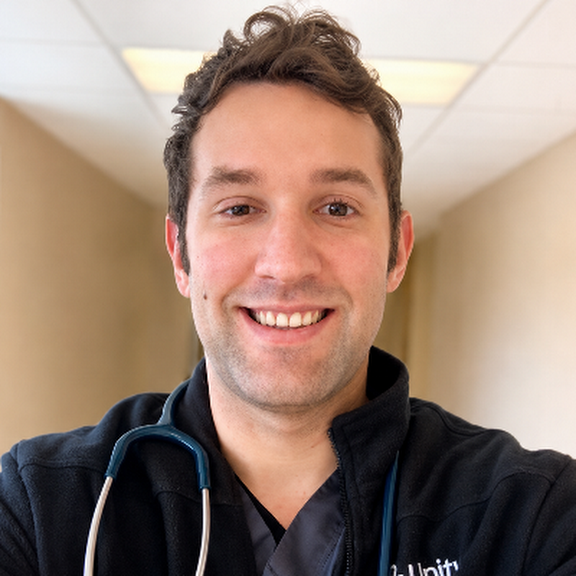

 Step 1Fill in the intakeTell us about your health and goals
 Step 2Request careAn online request, a message or a video visit
 Step 3Doctor reviewa doctor licensed in Vermont decides whether it’s right for you
 Step 4SubscribeIf prescribed, start your doctor’s care at $28/mo and we send your prescription
 Step 5Get your medicineYou buy it from LillyDirect, which ships it to your door